Museum 411 is pleased to share this perspective from John Abrahamson, originally published on Medium. It explores why organizational culture must come before strategy, an especially timely topic for museums navigating change.
John served as vice president of revenue for the Monterey Bay Aquarium and vice president of strategy and revenue for the National Geographic Society, specifically to help create their new Museum of Exploration opening in 2026.
Strategic planning is a major undertaking for many nonprofits. It sets priorities and impact goals for the next three to five years. There are weeks of meetings, cross-department discussions, and careful documentation, then implementation plans cascade through each part of the organization.
Inevitably, culture comes up as part of how the institution will achieve those goals. We write aspirational values and describe the kind of culture that would align with and support the organization’s mission.
But culture isn’t built by a well-crafted plan alone. Culture is created (or eroded) by how every leader shows up day after day. In this piece I describe an approach to building a resilient, growth-mindset culture that encourages innovation, ownership, and lower turnover. When you inspire teams, silos crumble and scarcity thinking dissipates.
It can feel like a lot to ask. Organizations are wrestling with budgets and uncertain futures; leadership is often scrambling. Yet these are precisely the times when we must double down on culture to support and hold safe the people who look to us for direction.
Trust — the organizing principle
If culture were a strategic plan, everything would roll up to one thing: trust. There are no shortcuts to building an inclusive, inspired organization. Trust is the foundation, and it demands deliberate, consistent behaviors from leaders, especially senior leaders.
To build trust across divisions and levels, leaders must practice:
- Empathy
- Curiosity
- Ownership
- Consistency
- Transparency
- Development
Below I unpack each and share practical examples from my own experience.
Empathy
(noun) the ability to understand and share the feelings of another
Early in my career as a (very) young artist I would spend long stretches in my studio. To balance isolation, I sometimes took restaurant work, for the social exposure and a few extra bucks. At good restaurants, new hires and managers would, as part of their training, rotate through different stations: expediter, dishwasher, host, busser, waiter, back of house. That rotation builds real empathy for what each role experiences during a shift.
For nonprofit leaders, developing a similar understanding of frontline work means getting out of the office, spending time with those teams, asking questions, and truly listening. Frontline staff want to know you see them, you understand their challenges, and you’re taking action.
When I served as Vice President of Revenue at the Monterey Bay Aquarium, I spent every Friday in a Guest Experience uniform, embedded with the teams. I showed up as a teammate, not a senior leader. By doing that consistently, I felt what their day was like, heard their frustrations and wins, and built a level of trust that a quick walk-through in business attire never could.
Curiosity
(noun) desire to know, inquisitive interest in others’ concerns
A genuine desire to learn about others’ perspectives breaks down walls and surfaces insight beyond the superficial.
As a painter I treated my work as therapy; new pieces could be challenging or ambiguous. When I delivered a painting to a gallery, the director often arranged for one client to meet me. He usually kept artists away from clients during initial viewings, except for me. The reason was that I asked collectors what they saw, why a piece resonated, and what meaning they found. I listened more than I explained. That curiosity created bonds and a loyal stable of clients.
Approaching interactions with authentic curiosity begins to set a foundation of trust, but only if it’s consistent.
Ownership
(noun) the act, state, or right of possessing something
One of the most corrosive behaviors in leadership is refusing to own outcomes. In one-on-ones with direct reports who aspire to lead, I tell them plainly: If you want to lead, you must accept responsibility when your teams fail and give the limelight to your team when they succeed. Leadership is a service role.
Leaders who take responsibility can change a situation or prepare better for the next time. If a team member is overworked, ask: Am I scheduling too many meetings? Am I prioritizing fearlessly? Have I set an example of work–life balance? Have I allocated adequate resources? If your answer is “it’s their fault,” those questions never get asked.
Practicing “Extreme Ownership,” (one of my favorite books on leadership by Jocko Willink), builds confidence and gets teams back on track.
Consistency
(noun) firmness of constitution or character
Consistency proves intent.
Everything I’ve described — empathy, curiosity, ownership — only works if it’s done consistently. It’s easy to start trust-building programs, but if leaders stop showing up, teams will know it was performative. Culture isn’t built in a day and can be destroyed in a blink. This takes commitment, time, and follow-through. A well-crafted strategic plan will never reach its potential without the right culture to implement it.
Transparency
(noun) the quality of being open to public scrutiny
Organizations tend to fall into one of two cultures:
- Teams are told only what they need to know; bad news is softened or hidden.
- Teams are trusted and leadership is open and forthcoming, good, bad, or indifferent.
In my experience, most staff discontent traces back to a lack of transparency. True transparency requires groundwork: Give teams the financial, historical, and cultural literacy to digest what you share. It takes courage and the willingness to face discomfort and answer hard questions, consistently.
Development
(noun) the process of developing or being developed
Continuous growth and learning are essential to trust and a resilient workforce.
I believe every leader has a duty to ensure staff growth through career conversations, learning resources, and mentorship. I committed one hour a month with each direct report solely for career development, entering those meetings with their goals in mind, not mine. If your only motivation is to shape them to meet your needs, they’ll sense it, and trust will erode.
This requires commitment. But if leaders commit to developing their teams, you’ll spend time growing people rather than replacing them.
Conclusion
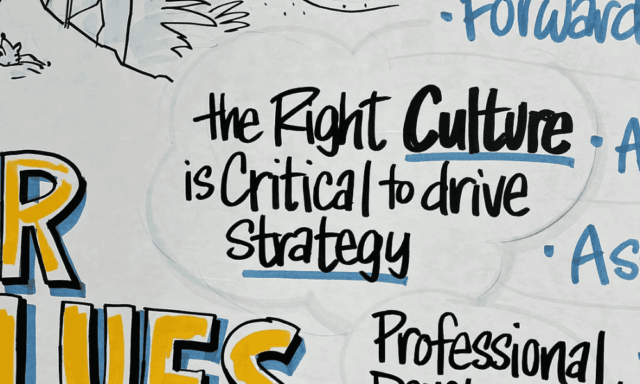
If you succeed in building an inclusive, supportive, inspired, and safe culture, you’ll see the return: creativity, ownership, lower turnover, and better results on your strategic goals. Put culture before strategy, because without trust and the daily behaviors that build it, strategy cannot be realized.