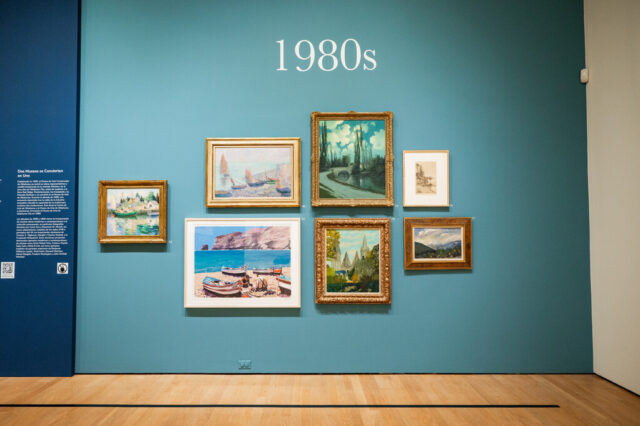
This past April, the Oklahoma City Museum of Art wrapped From the Vault: The 80th Anniversary Exhibition, organized in honor of the museum’s eightieth anniversary.
We reached out to OKCMOA Curator of Exhibitions Jessica Provencher to learn about:
- Behind-the-scenes prep
- Surprises along the way
- Lessons learned
- Advice for anyone considering a show of objects from the archives
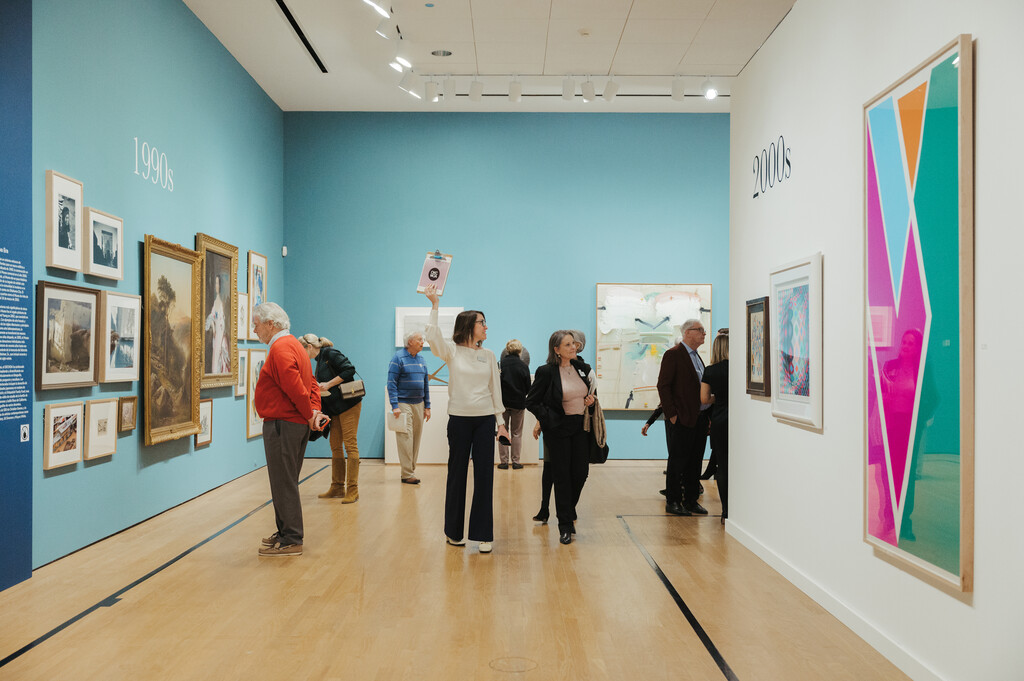
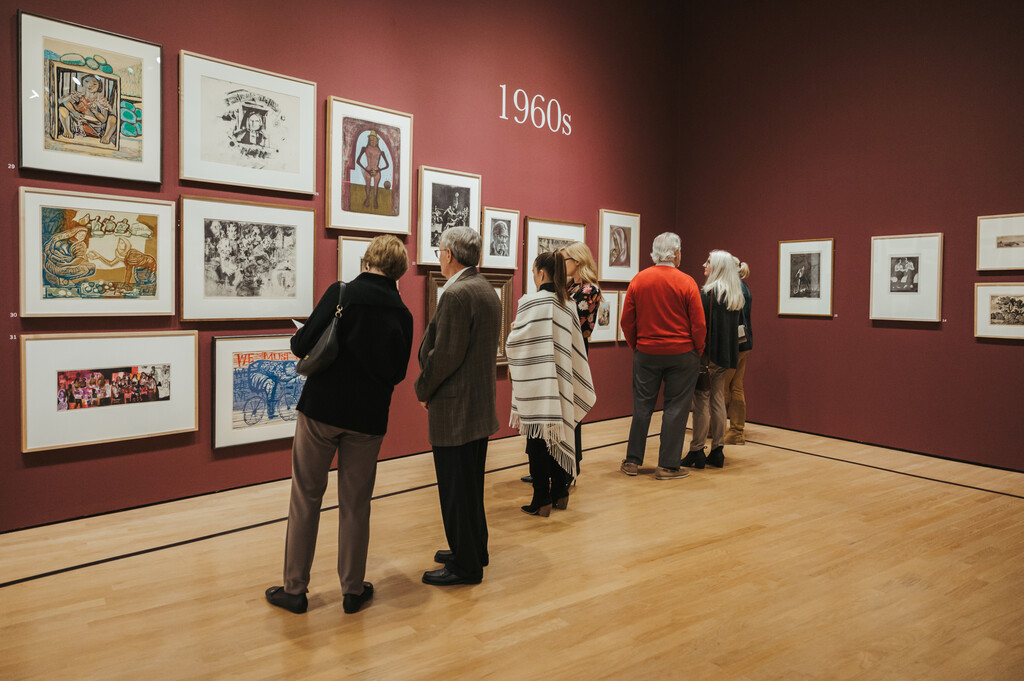
Click on the questions below to find out more about the development of the exhibition and read Jessica’s thoughtful responses (with more photos peppered throughout).
>How did you decide which artworks to feature?
It was about showcasing some of the depth and strengths of the museum’s permanent collection that visitors might not always get to see. (We can only display 2 – 5% of our collection at a time due to limited gallery space and shorter display times for works on paper.)
I also wanted to highlight some of our key acquisitions to help tell the story of OKCMOA and our collection in honor of our 80th anniversary.
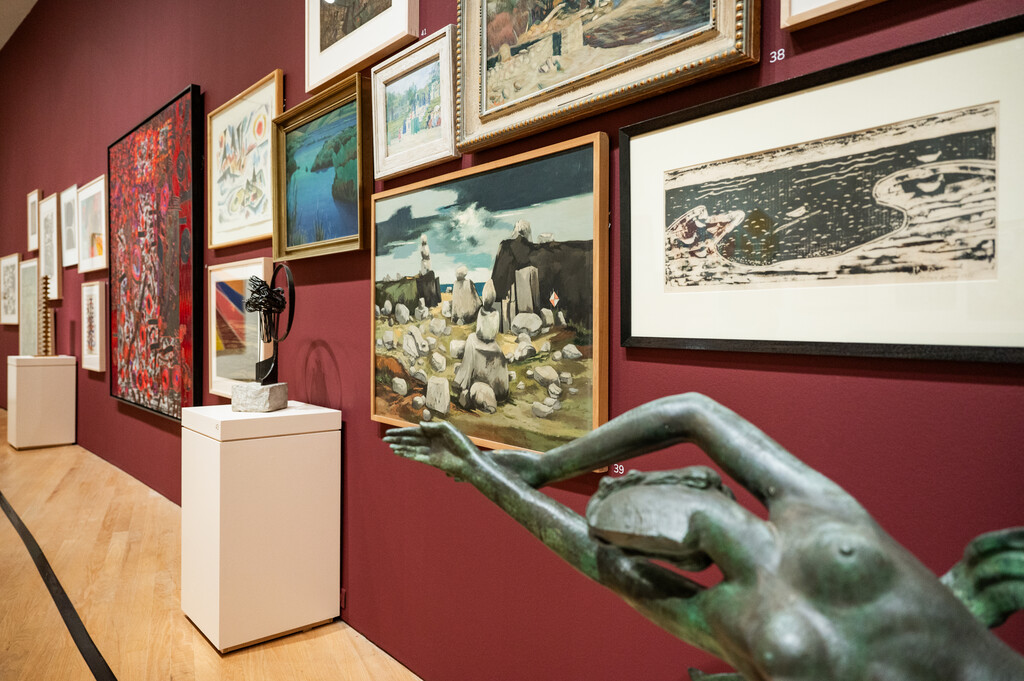
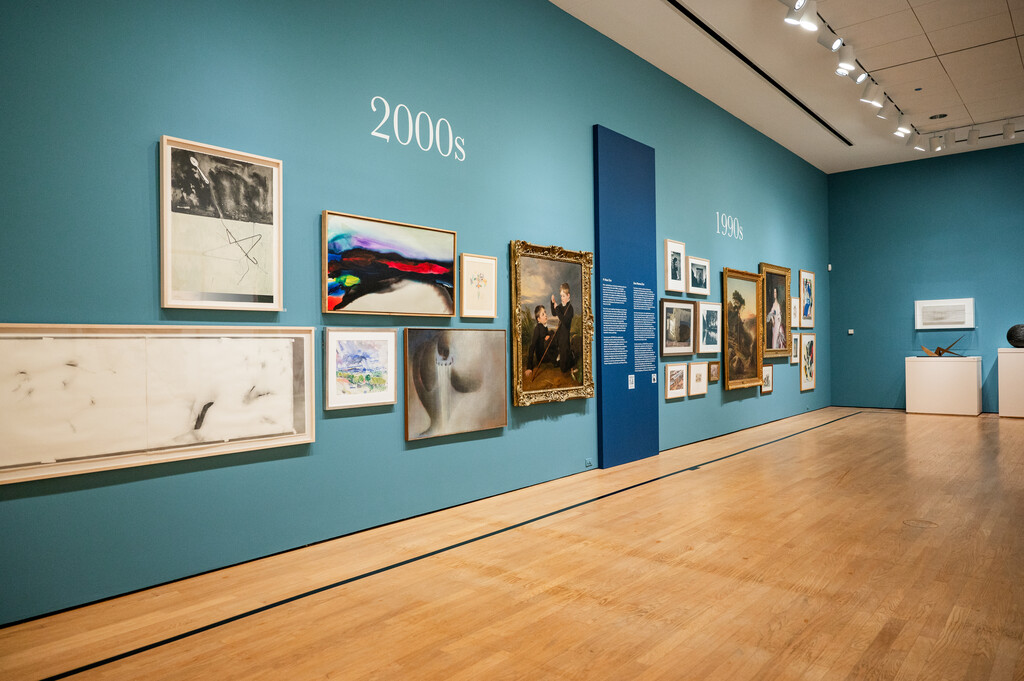
With this in mind, we chose to include only works that had never been exhibited or on display in the last five years, and then later decided to organize them by the decade in which they were accessioned. Since our collection is mostly comprised of works on paper and photography, I also wanted to have a strong representation in that area.
The initial checklist had to be narrowed down, of course, but factors such as condition, artwork size, distribution of works per decade, diverse representation, and even voting by the public helped inform the final selection.
>Was there collaboration across OKCMOA departments to shape the final presentation?
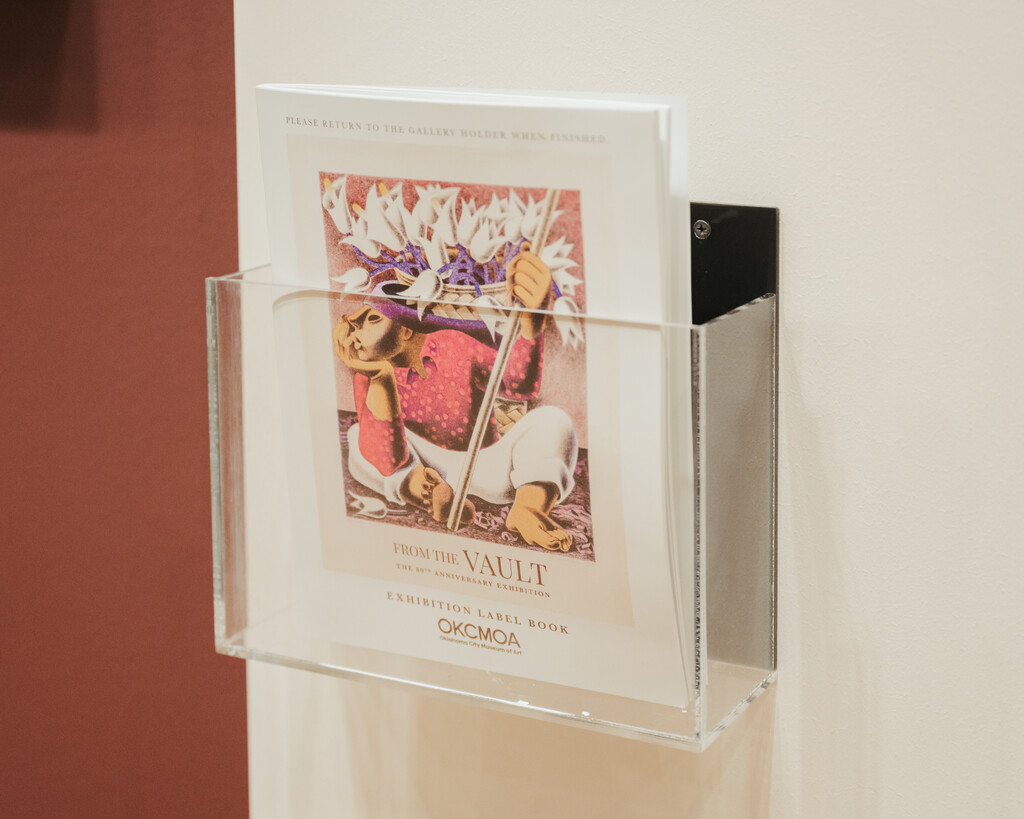
Yes, I worked with our marketing team to develop a brand identity for the show, which informed elements such as the exhibition font, booklet design, and title wall.
Our prep team and I collaborated with our programs manager, Neely Simms, on the inclusion of a detail search and binoculars [Ed. note: More on these below.]. And I worked with our museum store manager, Richard Bruner, on potential merchandise to feature in-store.
>The choice to have a label booklet vs. wall-mounted labels — how did that come about?
We realized early on that there wouldn’t be enough space for bilingual wall-mounted labels if we wanted to display the large amount of artwork that we did and arrange them in salon style and group hangings. We discussed various options, such as a railing system, but ultimately decided to use a label booklet, which is something we have successfully implemented in previous exhibitions.
>Within the booklet, how did you decide which artworks would get extended labels vs. simple attribution and dates?
Some artworks had existing extended labels, so I initially created a breakdown to see the distribution of those labels across the different sections.
From there, I made a list of both notable and underrecognized artists that didn’t have existing extended labels but that I felt should be highlighted in the exhibition. I also took into account the total amount of extended labels in each section and tried to prioritize artists and works that hadn’t been featured at OKCMOA for a while, if ever, as well as new acquisitions.
In cases of multiple works by a single artist, we limited extended labels to one per artist. Three other curatorial staff members and I each selected as many artists from the list as possible to write labels for within the limited time that we had. However, we all wish we could have written more.
>The binoculars are a fun touch. How did those hold up?
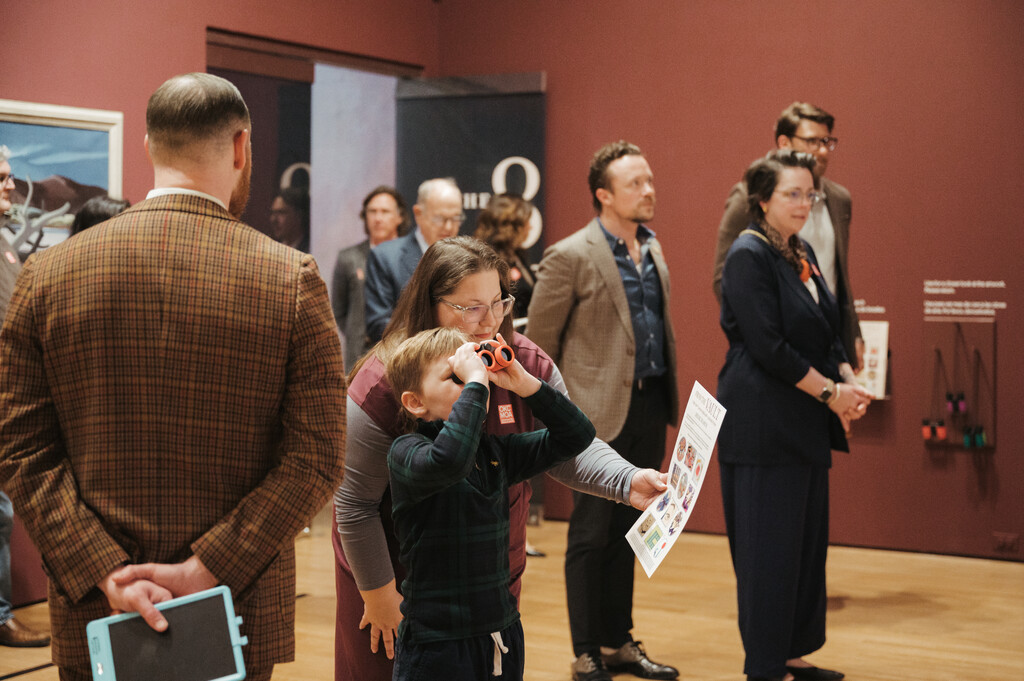
Including binoculars was really the idea of our programs manager, Neely Simms. She intended for them to accompany the artwork detail search that she created for the exhibition; however, we also discussed the potential benefits of the binoculars in helping visitors view some of the artworks more clearly.
Overall, the binoculars she selected held up very well. The only real maintenance needed was keeping them untangled and making sure we had enough available in the exhibition, since some went missing during the show.
>Any surprises during the development/selection process?
I was most surprised by the number of hidden gems we had in the vault and how long it had been since many of them were last displayed, despite being in excellent condition.
Next to that would be how different and better some artworks looked in person after initially viewing their small thumbnails in our database.
The last surprise of the development/selection process was probably that we couldn’t fit quite as much artwork in the exhibition space as we hoped, so I had to cut about 50 objects.
>What were the logistical challenges in installing works that hadn’t been exhibited in decades?
On my end, there was a significant amount of object information that needed to be verified and updated to ensure the labels were accurate, which required a great deal of research in a short time.
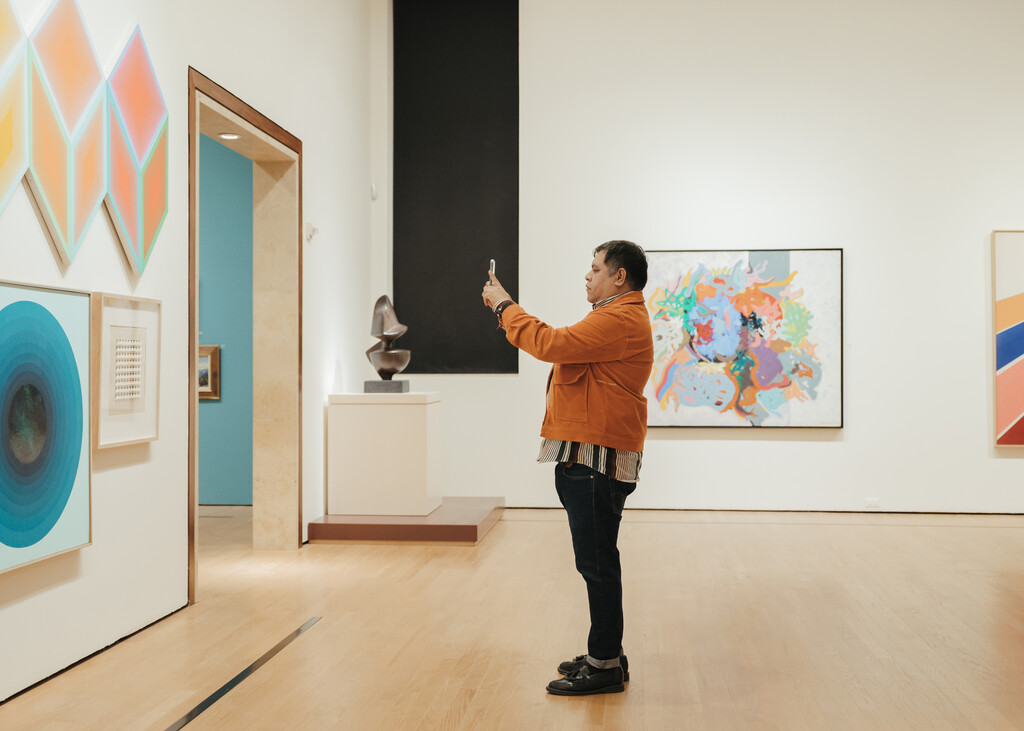
Another challenge was figuring out how to display and install certain works, such as a sculpture that no longer had its base. We had an artwork comprised of multiple diamond-shaped panels that had not been exhibited due to condition issues and lacked an apparent hanging system, so we were initially uncertain how to install it. Our chief preparator, Trent Lawson, is a great problem solver and was able to devise a way to display it during the installation.
Many other works needed to be matted or re-matted, and they required new or updated framing since they hadn’t been exhibited in a long time, if ever. Our preparation staff had to devote considerable time, including some long workdays, to preparing all of the artwork for display.
>What advice would you give to curators at other institutions planning a vault-based exhibition?
If it features many works that haven’t been displayed for a long time, or possibly ever, I would say that it’s very important to allow adequate time for the planning of the exhibition.
Vault-based shows can require a lot of work, especially when there are no existing extended labels, many of the artist files are lacking in research materials, and object information hasn’t been verified in a while. Additionally, if the artworks have been in the vault for an extended period, a lot of preparation may be needed to get them ready for display, as was the case [for us].
I would also recommend that curators organizing vault-based exhibitions consider works they might not typically display or haven’t exhibited previously due to minor condition issues. Featuring them in a show like this can help visitors understand why some works have remained in storage. Plus, there are often fantastic artworks that don’t get displayed because of minor condition problems, yet the public would still appreciate the opportunity to see them.
In our exhibition, there were several instances where I had to weigh the importance of displaying an artwork against its less-than-ideal condition, and I’m glad I did. In many, if not all, cases, our visitors didn’t notice the condition issues and were sometimes surprised to learn that was the reason some artworks hadn’t been exhibited.
>If you were to do this again, what would you do differently?
I began working on this project shortly after I started at OKCMOA in September 2023, so we were a little behind in the planning process. Given how large the exhibition was and our goal to include many works that hadn’t been on display in a long time, or even ever, I definitely would have allowed more time for the planning, research, and writing if I could have done things differently.
In addition to having more extended labels, I would also have liked to find a way to include physical labels for the artwork rather than putting them in a booklet. Due to the number of pages, they didn’t hold up as well as we thought they would.
>As a visitor, I found the exhibition to be really successful and engaging. How was the public response overall?
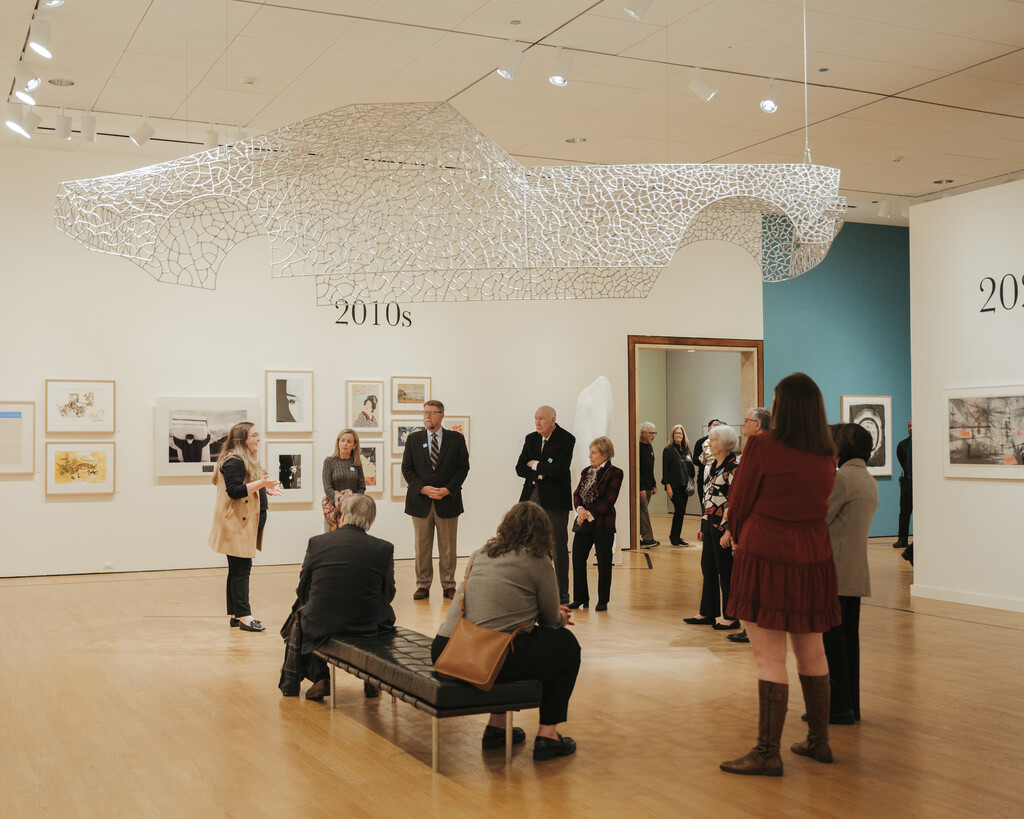
We’ve received a lot of positive feedback. Visitors enjoyed viewing so many works from our collection vault, especially works they hadn’t seen before or encountered in a long time. They also appreciated the strong representation of works on paper as well as the diversity of artists included.
Not many people knew until the exhibition that we have a number of works by Latin American artists. And visitors really liked the large salon-style wall, the binoculars, and getting the opportunity to vote on works to be included in the exhibition.
>Do you see this influencing your future curatorial projects or the museum’s approach to its collection?
Absolutely. Part of the exhibition concept was to make our collection more accessible, which our visitors really enjoyed. In my opening lecture, I mentioned that the idea of sharing more of our collection — especially works that haven’t been displayed before — with the community does not end with this exhibition. That’s still the intention of our current curatorial team.
With many of our permanent collection installations, including some that opened just before From the Vault, we’ve been actively including works that haven’t been on view for a long time, if ever, as well as new acquisitions while still retaining some visitor favorites and the great works we are known for.
And we now have a dedicated gallery on our second floor for displaying the works on paper and photography that comprise the majority of our collection. While we’ll still include works on paper in other galleries, having a dedicated space will help us share more of these works with the community.
I also think the positive reactions to the salon and group hangings we featured in From the Vault will also inform how we display our collection in future installations.
Disclosure: This interview has been lightly edited for clarity.
Find the Oklahoma City Museum of Art:
Facebook
Instagram
YouTube
LinkedIn
If you’d like to share insights with fellow museum pros about a successful program, project, exhibition, or initiative at your museum, please reach out!