A few weeks ago, we shared an article about problems at the Freud Museum stemming from its board. In a nutshell, allegations of political interference, unclear decision-making, and deteriorating staff relationships have drawn public criticism and triggered regulator attention. (Freud Museum Faces Call for Inquiry Over Bullying and Board Misconduct Claims)
How did things get so bad? This particular case is a reminder that problems can escalate quickly if they aren’t addressed. Without reflection, the stage is set for staff-board tensions, reputational damage, weakened fundraising capacity … you name it.
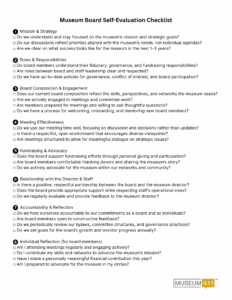
The following checklist is designed to guide your board through a candid, structured conversation.
As you move through the list, take time to celebrate strengths and to call out growth opportunities. These questions are not meant to provoke defensiveness or finger-pointing, but to prompt honest conversations about how your museum board can work more effectively as a collective leadership body.
1. Mission & strategy
☐ Do we understand and stay focused on the museum’s mission and strategic goals?
☐ Do our discussions reflect priorities aligned with the museum’s needs, not individual agendas?
☐ Are we clear on what success looks like for the museum in the next 1–3 years?
2. Roles & responsibilities
☐ Do board members understand their fiduciary, governance, and fundraising responsibilities?
☐ Are roles between board and staff leadership clear and respected?
☐ Do we have up-to-date policies for governance, conflict of interest, and board participation?
3. Board composition & engagement
☐ Does our current board composition reflect the skills, perspectives, and networks the museum needs?
☐ Are we actively engaged in meetings and committee work?
☐ Are members prepared for meetings and willing to ask thoughtful questions?
☐ Do we have a process for welcoming, onboarding, and mentoring new board members?
4. Meeting effectiveness
☐ Do we use our meeting time well, focusing on discussion and decisions rather than updates?
☐ Is there a respectful, open environment that encourages diverse viewpoints?
☐ Are meetings structured to allow for meaningful dialogue on strategic issues?
5. Fundraising & advocacy
☐ Does the board support fundraising efforts through personal giving and participation?
☐ Are board members comfortable thanking donors and sharing the museum’s story?
☐ Do we actively advocate for the museum within our networks and community?
6. Relationship with the director & staff
☐ Is there a positive, respectful partnership between the board and the museum director?
☐ Does the board provide appropriate support while respecting staff’s operational roles?
☐ Do we regularly evaluate and provide feedback to the museum director?
7. Accountability & reflection
☐ Do we hold ourselves accountable to our commitments as a board and as individuals?
☐ Are board members open to constructive feedback?
☐ Do we periodically review our bylaws, committee structures, and governance practices?
☐ Do we set goals for the board’s growth and monitor progress annually?
8. Individual reflection (for board members)
☐ Am I attending meetings regularly and engaging actively?
☐ Do I contribute my skills and networks to advance the museum’s mission?
☐ Have I made a personally meaningful financial contribution this year?
☐ Am I prepared to advocate for the museum in my circles?
After you’ve completed the checklist, identify two or three priorities for the coming year. Perhaps an anonymous survey would allow for deeper insights? Either way, make sure to end the process by recognizing what’s working well.
Click the image below to access a printable PDF of the questions.